The Perfect Height for a Wall Mounted TV: A Technical Guide to Getting It Right
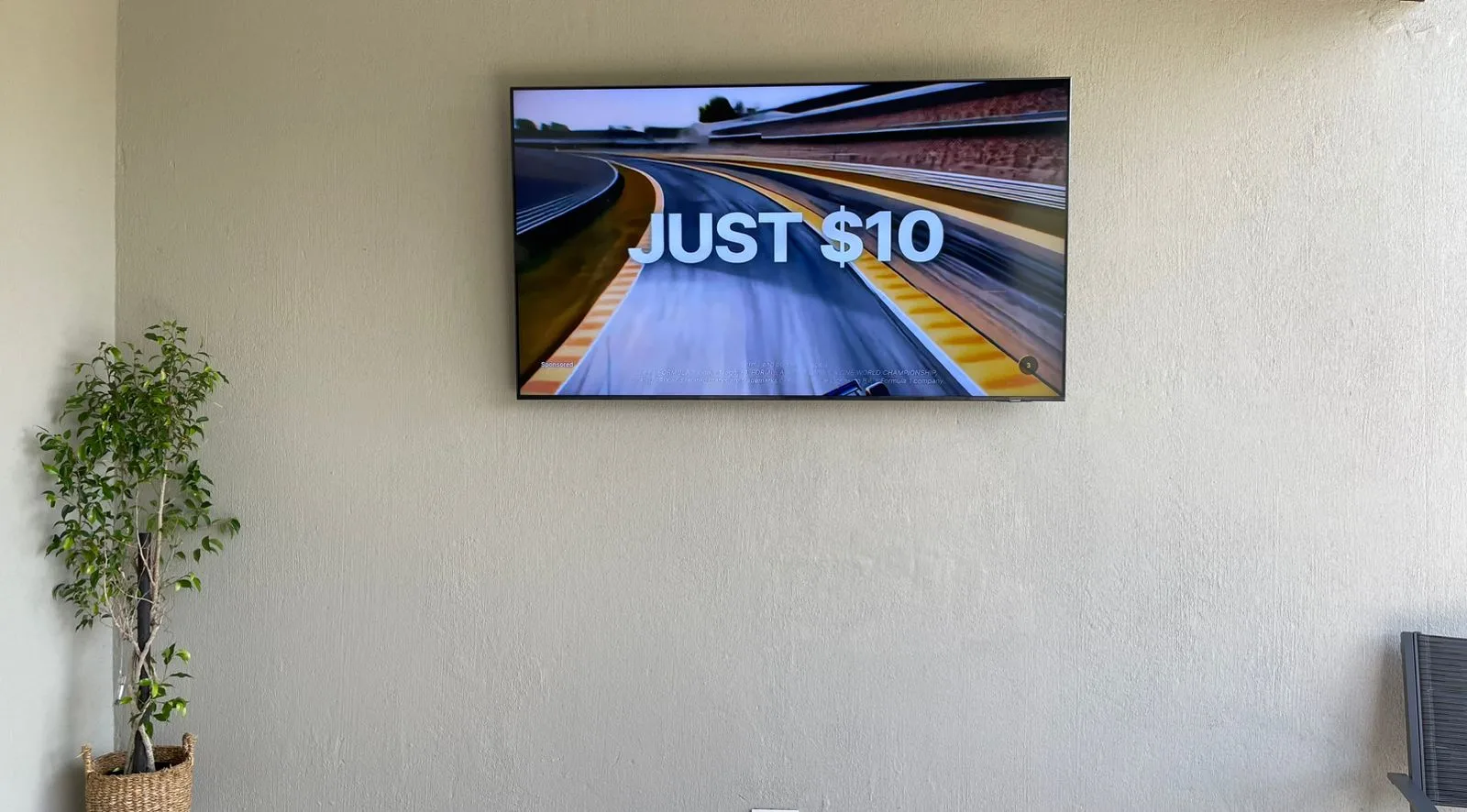
Finding the perfect height for a wall mounted TV is one of the most important decisions you make during a home entertainment setup, and research from TaskRabbit in 2026 confirms that the ergonomic sweet spot for a living room installation sits at exactly 42 inches from the floor to the center of the screen, which aligns precisely with the average adult's seated eye level. When our dstv installers complete a TV wall mounting job, this measurement is always the starting baseline before any room-specific adjustments are made.
Key Takeaways
- Standard living room height: The center of your TV screen should sit approximately 42 inches from the floor when seated viewers are at standard couch height.
- Bedroom installations: Reclined viewing from a bed requires a higher center point of around 50 inches to compensate for the different viewing angle.
- TV size matters: A 55-inch TV's bottom edge should sit roughly 26 inches from the floor to achieve a correct center point.
- Eye-level principle: Your eyes should meet the middle third of the screen without any upward or downward tilt of the neck.
- Viewing distance formula: The vertical center of a screen should be approximately 22% of the total viewing distance above the seated eye level for immersive setups.
- Professional installation: A qualified dstv technician ensures correct height, secure mounting, and concealed cabling in a single visit.
- Tilt brackets adjust for errors: If a fixed mount was installed too high, a tilt bracket can reduce neck strain by angling the screen downward.
Why the Perfect Height for a Wall Mounted TV Directly Affects Comfort
Incorrect mounting height causes chronic neck and eye strain over time. When a screen is mounted too high, viewers tilt their heads back for extended periods, placing sustained load on the cervical spine.
The human eye naturally rests in a position that looks slightly downward at rest. This means a screen positioned at or just below eye level is far less fatiguing than one placed above eye level, which is the most common mistake we encounter on job sites.
A professional dstv installation service always measures the seated eye level of the household before drilling a single fixing. The position of your couch, the height of your TV stand (if combining a partial stand with a wall bracket), and the floor-to-ceiling dimensions all influence the final recommended height.
The Standard Formula for the Perfect Height for a Wall Mounted TV by Room Type
Different rooms demand different mounting heights because the viewer's body position changes. Below is a technical breakdown of the recommended center-of-screen height per room type.
- Living room (sofa seating): 42 inches from floor to screen center.
- Bedroom (lying or reclining): 50 inches from floor to screen center.
- Kitchen or dining room (bar stool seating): 54 to 60 inches from floor to screen center.
- Home theatre (dedicated recliner seating): Apply the 22% viewing distance rule above seated eye level.
- Office or boardroom: 48 to 54 inches depending on whether viewers are standing or seated at desk height.
These figures are starting points. Your dstv technician will refine the final position based on actual furniture height measurements taken on-site before mounting commences.
Discover how to position your TV for the best viewing experience. These five guidelines help you nail the ideal wall-mounted height.
How TV Screen Size Changes the Perfect Height for a Wall Mounted TV
The larger the screen, the more the mounting height must account for the total vertical dimension of the panel. A taller screen occupies more visual real estate, which shifts the physical position of its center point.
For a standard 55-inch TV, the bottom edge should be positioned approximately 26 inches from the floor to maintain the correct eye-level center point. This is one of the most searched sizing questions we receive from clients before a booking.
For a large 75-inch screen, the recommended center height increases slightly to 45 to 47 inches to maintain a balanced field of view without placing the bottom edge too close to the floor or the top edge above comfortable sightlines.
Use this quick reference for common screen sizes in a standard lounge with a couch seated at approximately 18 inches:
- 40-inch TV: Bottom edge at 26 inches, center at approximately 40 inches.
- 50-inch TV: Bottom edge at 20 inches, center at approximately 42 inches.
- 55-inch TV: Bottom edge at 18 to 22 inches, center at approximately 42 inches.
- 65-inch TV: Bottom edge at 14 to 18 inches, center at approximately 42 to 44 inches.
- 75-inch TV: Bottom edge at 12 to 15 inches, center at approximately 45 to 47 inches.
The Impact of Mounting Height on Eye Health During Extended Viewing
This section addresses a technical consideration that many homeowners overlook completely. Screen height is not just about comfort during a 30-minute programme. For households where the television runs for several hours daily, incorrect height causes measurable eye strain.
Scientific research published by the NIH National Library of Medicine has demonstrated that viewing UHD (4K) TVs at a distance of only 1.6 times the screen height results in significant ocular fatigue and decreased tear break-up time. While this data addresses viewing distance, it applies equally to vertical angle: any deviation from a neutral eye position amplifies fatigue when combined with close proximity.
The practical implication is that mounting a TV too high compounds the effects of sitting too close. A dstv installation that accounts for both horizontal distance and vertical height reduces the cumulative strain on the viewer's visual system significantly.
Our technicians always discuss these factors with clients during the pre-mount assessment, particularly in households with young children or individuals who spend long periods in front of the screen for work or entertainment.
Wall Type Considerations That Affect the Perfect Height for a Wall Mounted TV
The structural properties of your wall determine where fixings can be placed, which sometimes restricts your ideal height to a specific range. Understanding this constraint helps you plan before the installation day.
Solid brick and face-brick walls offer the highest load capacity and the most flexibility in fixing placement. Our technicians use masonry anchors rated well above the TV's weight, and these walls rarely limit the chosen height.
Drywall (gypsum board) requires fixings to align with the metal or timber studs behind the board. Stud spacing in South African construction is typically 600mm on centre. If your ideal height falls between two studs, a backing plate or horizontal timber noggin must be fitted first, which adds preparation time to the job.
Face-brick and exposed feature walls are common in Gauteng homes and require specific drill bits and anchor types. The mortar joints can sometimes be exploited for easier drilling, but the fixing depth must still penetrate into the brick itself for adequate load rating.
Choosing the Right Bracket Type for the Perfect Height for a Wall Mounted TV
The bracket you select has a direct impact on whether you can correct a height error after installation and how much flexibility you retain for future adjustments.
There are three primary bracket categories used in residential installations across Gauteng:
- Fixed (flat) brackets: The TV sits flush against the wall. Once mounted, the height cannot be changed without removing the bracket entirely. Precision in the initial measurement is non-negotiable with this bracket type.
- Tilt brackets: Allow a downward tilt of between 5 and 15 degrees. These are particularly useful when the ideal structural fixing point is slightly higher than the ergonomically perfect position. The downward tilt compensates visually.
- Full-motion (articulating) brackets: Extend, swivel, and tilt. These offer the most post-installation flexibility and are recommended for rooms where viewing happens from multiple positions or angles.
When our dstv installers survey a room before mounting, the bracket recommendation is informed by both the structural constraints of the wall and the ergonomic requirements of the household.
Common Height Mistakes and How a Qualified DStv Technician Avoids Them
Approximately 22% of homeowners who undertake TV mounting choose to handle it as a DIY task. The most consistent error in these installations is mounting the screen 12 to 20 centimetres too high, typically because the installer eyeballed the height while standing rather than measuring from a seated position.
Additional common errors include:
- Mounting above a fireplace without accounting for heat damage and extreme upward viewing angles.
- Failing to measure seated eye level and instead using a generic height from an online guide without adjusting for actual furniture height.
- Ignoring the effect of the bracket's own protrusion, which shifts the screen's visual centre slightly downward from the wall fixing point.
- Not checking for horizontal level, causing a visibly tilted installation that no height calculation can fix.
A qualified dstv technician uses a combination of a laser level, measuring tape, and a pre-mount template to mark the exact fixing position before any drilling begins. This process eliminates all of the above errors in a single structured workflow.
Cable Management and the Perfect Height for a Wall Mounted TV
Height selection also determines cable routing complexity. The higher the TV is mounted relative to the power outlet and decoder shelf below, the longer the cable run and the more extensive the in-wall channelling or conduit work required.
Our dstv installation teams plan the cable route as part of the pre-mount survey. In brick walls, a chase is cut vertically from the TV bracket position down to the outlet level. In drywall, cables are typically run inside the cavity between the boards, emerging at a secondary bracket-mounted outlet plate directly below the TV.
Concealed cabling is included as standard in our TV wall mounting service across all 28 Gauteng suburbs we cover. Visible cable loops running down a wall are a sign that the installation was not completed to a professional standard, regardless of how accurate the height measurement was.
How DStv Installers in Gauteng Handle TV Mounting as Part of a Full Setup
TV wall mounting is frequently requested alongside a full dstv installation, particularly when clients are setting up a new entertainment system from scratch. Combining both services in a single visit reduces disruption and ensures the decoder, dish signal, and screen position are optimised as a single integrated system.
Our dstv installers cover 28 suburbs across Gauteng, including Sandton, Centurion, Pretoria East, Moreleta Park, and surrounding areas. Every visit includes a pre-work assessment, precision mounting, concealed cabling, and a post-installation signal and picture quality check.
For bookings or technical questions about mounting height for your specific room and screen size, contact us directly on 0774544032. Learn more about our service coverage and technician qualifications at about DSTV Pro Installers, or check suburb-specific availability on our Moreleta Park installer page.
Conclusion
Achieving the perfect height for a wall mounted TV requires a combination of precise measurement, an understanding of viewer body position, knowledge of wall construction, and the correct bracket for the specific application. The 42-inch center-point rule for living rooms provides the best starting baseline, but every room and every household requires individual adjustment to reach the true optimum.
A professional dstv technician brings all of these variables together in a single structured installation process. Whether you are mounting a 40-inch screen in a compact bedroom or a 75-inch panel in a dedicated home theatre, the correct height for a wall mounted TV is never a guess. It is a calculated result derived from your furniture height, your viewing distance, your wall type, and the dimensions of your screen.
Call DSTV Pro Installers on 0774544032 to book a professional TV mounting assessment across any of our 28 Gauteng service suburbs.
Frequently Asked Questions
What is the perfect height for a wall mounted TV in a standard living room?
The perfect height for a wall mounted TV in a standard living room is 42 inches from the floor to the center of the screen. This measurement aligns with the average adult's seated eye level on a standard-height couch and is the baseline used by professional installers across the industry.
How high should a 65-inch TV be mounted on a wall?
For a 65-inch TV, the bottom edge of the screen should sit between 14 and 18 inches from the floor, placing the screen center at approximately 42 to 44 inches. This maintains the correct eye-level viewing position for a seated adult in a standard living room.
Is it bad to mount a TV too high on the wall?
Yes, mounting a TV too high forces viewers to tilt their heads back for extended periods, which places sustained load on the cervical spine and causes increased eye strain. This is the single most common error in DIY TV mounting installations and is one of the primary reasons professional installation is recommended.
What height should a wall mounted TV be in a bedroom?
In a bedroom where viewing happens from a reclining or lying position, the perfect height for a wall mounted TV is a center point of approximately 50 inches from the floor. This higher position compensates for the reduced viewing angle created by a reclining body position compared to upright couch seating.
Should I use a tilt bracket if my TV is mounted slightly too high?
A tilt bracket can compensate for a mounting position that is 5 to 15 centimetres above the ergonomically ideal height by angling the screen downward toward the viewer. However, this is a corrective measure, not a substitute for accurate initial measurement. A correctly positioned fixed bracket produces better viewing geometry than a tilted screen at a non-optimal height.
Can a dstv technician mount my TV and set up my decoder in the same visit?
Yes, our dstv technicians regularly combine TV wall mounting with a full dstv installation in a single scheduled visit. This integrated approach ensures the decoder position, cable routing, dish signal, and screen height are all optimised together as a complete entertainment system setup.
How do I calculate the perfect wall mounted TV height for my specific room?
Measure the height of your eye level while seated on your couch, which for most adults on a standard 18-inch couch is approximately 42 to 44 inches from the floor. The center of your TV screen should align with this measurement, and you can work backwards from there to calculate the bottom-edge fixing position based on your specific screen size.
Keep reading
In case you missed it
Planning a job? See TV wall mounting from R650. Or browse our DSTV installer in Randburg and Fourways DSTV installer service pages.
More to read: our guide: upgrade to dstv triple view.