How to Fix DSTV No Signal: A Complete Troubleshooting Guide for Gauteng Subscribers
When your screen displays the dreaded "No Signal" or E48-32 error, knowing how to fix DSTV no signal quickly can save you from missing your favourite content. In fact, 67% of all "No Signal" errors are caused by poor satellite dish alignment, which means the problem is far more likely to be a physical hardware issue than a fault with your decoder or subscription.
Key Takeaways
- What does the DSTV No Signal error mean? It means your decoder cannot receive a strong enough signal from the satellite. This is usually caused by a misaligned dish, damaged LNB, faulty cabling, or weather interference.
- Can I fix DSTV no signal myself? Basic checks (power cycling, cable inspection) can be done at home. Dish alignment and LNB replacement require a qualified DSTV technician with calibrated signal meters.
- How long does a professional repair take? Most signal faults are resolved within a single same-day call-out. We serve 28 Gauteng suburbs for rapid response.
- What causes sudden DSTV signal loss? Wind-shifted dishes, rain fade, cable deterioration, LNB damage from power surges, and obstructions like tree growth are the most common triggers.
- Is it expensive to fix DSTV no signal? Most repairs are straightforward dish alignment or cable replacement jobs, which are affordable and completed on-site without the need for specialised parts in most cases.
- Who should I call to fix DSTV no signal in Gauteng? Contact DSTV Pro Installers on 0774544032 for a same-day call-out across 28 Gauteng suburbs.
Understanding the DSTV No Signal Error and What It Means
The DSTV "No Signal" error (commonly displayed as error code E48-32) appears on screen when your decoder fails to receive a usable satellite signal. This is a technical handshake failure between your dish and the satellite transponder.
The error does not automatically indicate a decoder fault. In the majority of cases, the problem lies with the external components of your DSTV dish alignment or your coaxial cable run.
Understanding the difference between a software error and a physical signal fault is the first step to fix DSTV no signal correctly without spending money on unnecessary replacements.
Common Causes of DSTV No Signal in Gauteng Homes
Gauteng subscribers deal with a specific set of environmental and infrastructure challenges that contribute to signal loss. Identifying the root cause accurately is essential before any repair attempt.
The most frequent causes we encounter during call-outs across the 28 suburbs we service include:
- Wind-shifted satellite dish: Strong Highveld winds can move your dish by as little as 0.5 degrees, which is enough to cause complete signal loss.
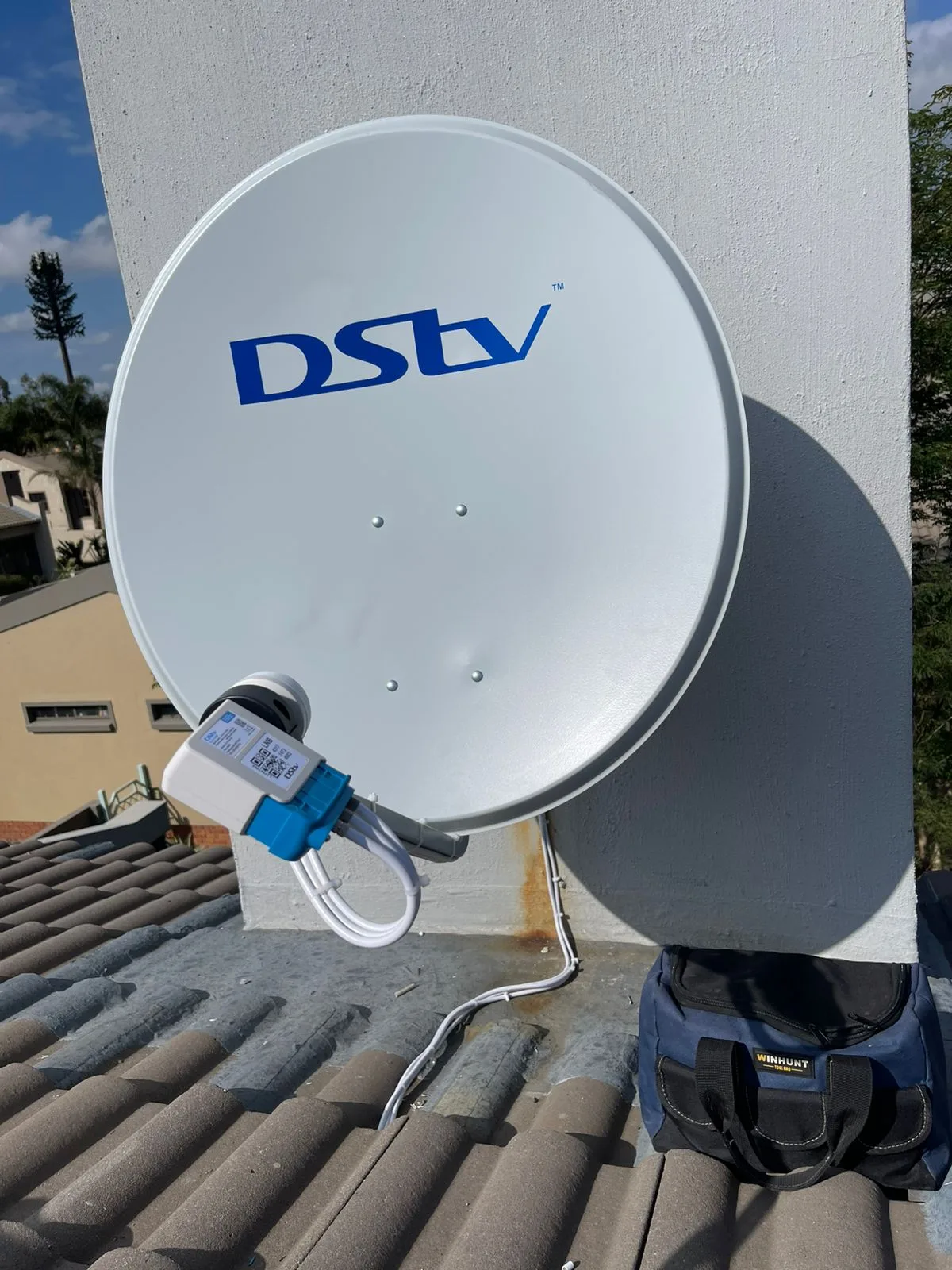
- Damaged or corroded LNB: The LNB (Low Noise Block downconverter) sits at the end of the dish arm and is highly susceptible to moisture ingress and UV degradation.
- Faulty or deteriorated coaxial cable: Coax cables exposed to South African UV rays can become brittle and begin allowing water ingress, leading to intermittent or complete signal failure.
- Load shedding power surges: Voltage spikes when power is restored after load shedding can silently damage your LNB and decoder.
- Obstructed line of sight: Trees, new structures, or satellite dish repositioning can block the required clear view to the satellite at the correct elevation angle.
- Rain fade: Heavy Gauteng summer storms can cause temporary signal attenuation, particularly on dishes already operating with a marginal signal baseline.
How to Fix DSTV No Signal: Basic Checks You Can Do First
Before calling a DSTV technician, there are a few basic diagnostic steps you can run at home. These will help confirm whether the issue is software-related or requires on-site physical attention.
- Power cycle your decoder: Switch the decoder off at the wall, wait 30 seconds, then switch it back on. Allow it to fully reboot before checking the signal.
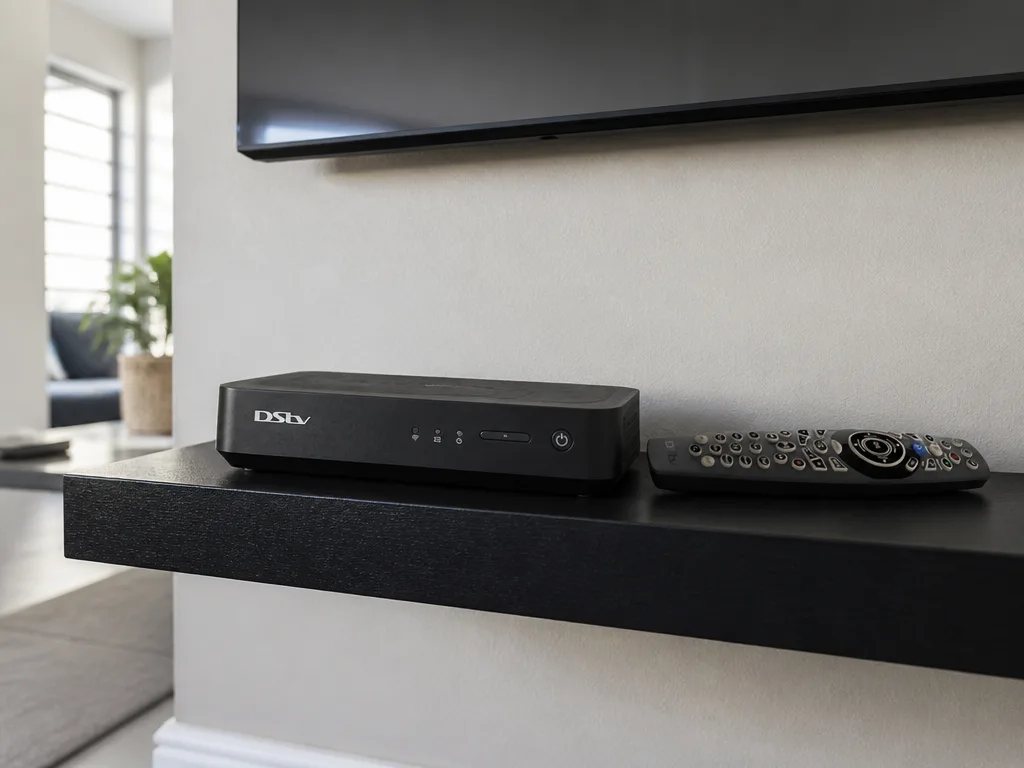
- Check all cable connections: Inspect the coaxial cable at the back of your decoder. Ensure it is firmly seated in the LNB IN port and has not worked loose.
- Inspect the dish visually: From ground level, check that the dish has not physically moved, sagged, or been obstructed by new growth from nearby trees.
- Check your signal strength on the decoder: Navigate to the signal strength meter in your decoder's menu (usually under Installation or Setup). A quality reading below 70% on a clear day indicates a misalignment or hardware problem that requires professional intervention.
- Confirm your subscription is active: Log in to the DSTV self-service portal or contact the DSTV call centre to confirm your account is not suspended or overdue.
If the basic checks above do not resolve the problem, the fault requires hands-on diagnosis and equipment such as a calibrated satellite meter to fix the DSTV no signal fault correctly.
How Dish Misalignment Causes DSTV No Signal and How We Fix It
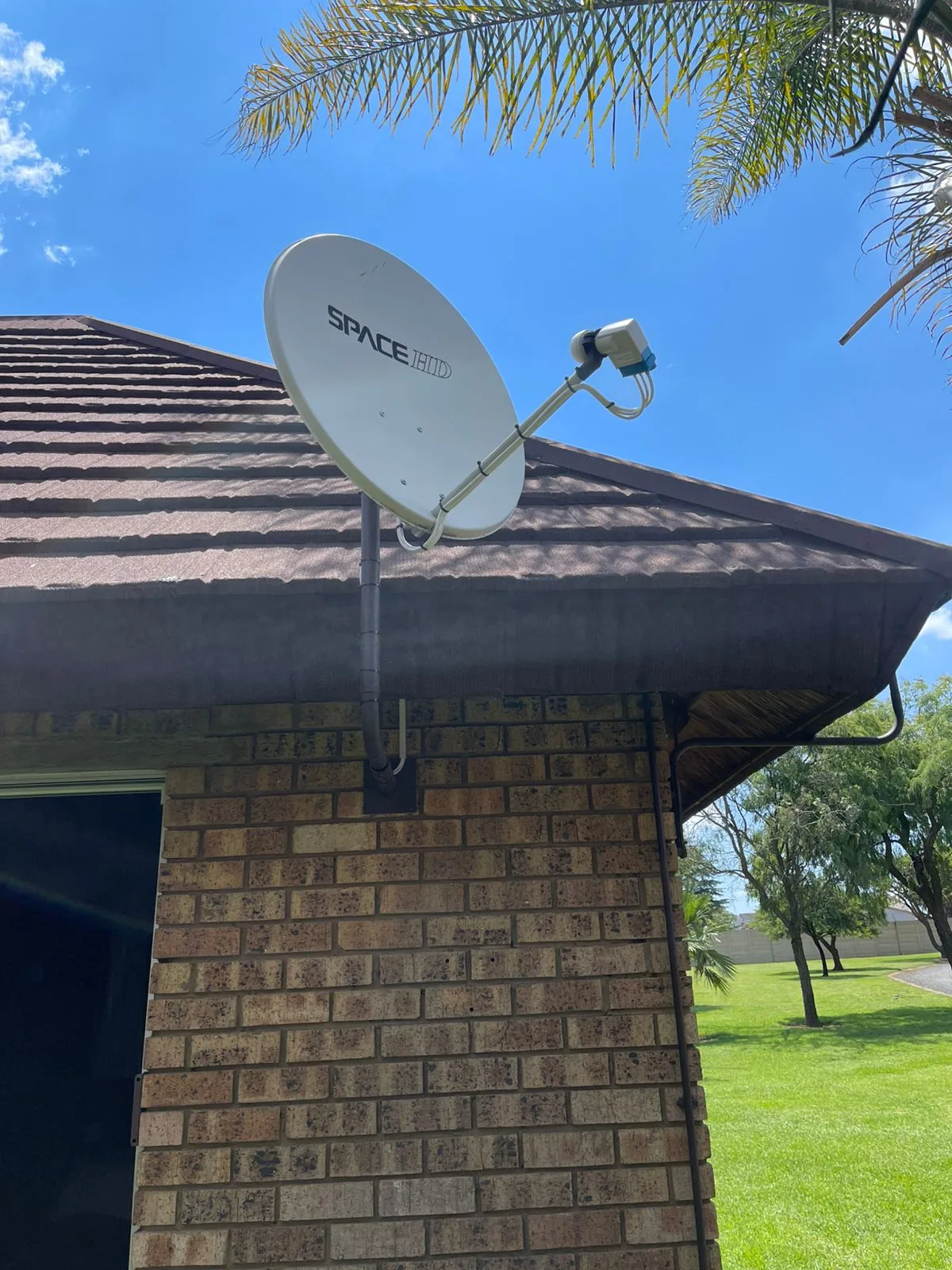
Satellite dish alignment is one of the most technical and precise aspects of any DSTV installation. The dish must point at a specific azimuth and elevation angle to communicate with the Intelsat 20 or IS-20 satellite at 68.5 degrees East.
Even a 0.5-degree shift in any direction can reduce signal quality from 90% down to below 50%, which is insufficient to decode a usable picture. Strong Highveld winds, children or animals knocking a wall-mounted dish, or bracket rust and movement over time are all common triggers.
Our DSTV technician team uses calibrated digital satellite meters to achieve a signal quality of 90% or higher on every alignment job. This level of precision is simply not achievable by eye or by using only the on-screen signal indicator.
If your signal quality reads below 70% on a clear day, you are statistically guaranteed to lose signal entirely during any Gauteng summer rainfall. Proper alignment is the most effective single step to fix DSTV no signal for the long term.
An easy 3-step guide to troubleshoot DSTV no signal. The infographic guides you through restoring your service quickly.
LNB and Coaxial Cable Faults That Cause DSTV No Signal
The LNB and coaxial cable are the two most frequently replaced components during a DSTV no signal repair. Both are exposed to South Africa's harsh outdoor conditions 365 days a year.
UV rays in South Africa degrade coaxial cables to the point of water ingress in as little as 3 to 4 years. A cable with compromised insulation will allow moisture into the conductor, creating resistive losses that drop signal quality intermittently or permanently. The fault often appears as pixelation or a "Searching for Signal" message rather than a total blackout.
LNBs fail due to several mechanisms:
- Physical water ingress: Condensation or direct rain entry through an unsealed feedhorn corrodes the LNB's internal circuitry.
- Post-load-shedding voltage spikes: The return of power after load shedding can deliver surges exceeding 11,000 volts, silently damaging the LNB's sensitive electronics.
- UV and heat cycling: Repeated expansion and contraction from daily temperature swings weakens solder joints and plastic housing seals over time.
- Physical impact: Hailstorms, which are common in Gauteng, can crack the LNB body and allow immediate moisture entry.
During an emergency DSTV repair call-out, our DSTV technician inspects and tests both the LNB and the full cable run before recommending any replacement. We do not guess at components; we verify with meters.
Weather-Related DSTV Signal Loss in Gauteng: What to Expect
Gauteng's subtropical highveld climate creates specific challenges for satellite signal reliability. Summer thunderstorms, hail, and strong winds are all capable of causing temporary or permanent DSTV no signal conditions.
Rain fade is a well-documented phenomenon where rainfall attenuates the Ku-band signal used by DSTV. The degree of signal attenuation depends on rainfall intensity and the baseline signal quality of your dish alignment.
A dish aligned to 90% quality on a clear day can typically maintain a viewable picture through moderate Gauteng rainfall. A dish sitting at 65 to 70% will lose signal entirely at the first sign of heavy cloud, even before rain reaches the ground.
Wind damage is a separate but related concern. Level 9 storms in Gauteng have recorded over 200mm of rain in 24 hours, with gale-force winds capable of overwhelming standard dish bracket mounts. We recommend reinforced mounting hardware and fully waterproofed F-connector fittings on all cable entry points in high-exposure installations.
If your signal returns automatically after a storm passes, rain fade is likely the cause. If signal does not return once the weather clears, the dish has been physically shifted or a connector has been compromised.
When to Call a DSTV Technician Instead of Troubleshooting Yourself
While basic power cycling and visual checks are safe for any subscriber to attempt, certain fault conditions require a trained DSTV technician with the correct equipment. Attempting dish alignment without a calibrated meter frequently results in a signal that is worse than before the adjustment, or one that appears adequate on screen but drops during the first overcast day.
You should contact a professional DSTV technician immediately in the following situations:
- The signal quality reading on your decoder menu is below 70% on a clear day.
- You have verified the dish has physically moved or the bracket is visibly damaged or rusted.
- The signal loss occurred immediately after a storm, power surge, or load shedding event.
- You experience intermittent pixelation or "Searching for Signal" messages that come and go randomly.
- Your LNB is more than 5 years old or shows visible cracking, corrosion, or water damage.
- You have performed all basic checks and the fault persists without an obvious cause.
Inexperienced or DIY attempts account for 80% of all technical DSTV problems in Gauteng suburbs. What starts as a simple no-signal fix can escalate into a damaged bracket, a cracked LNB, or a wrongly torqued F-connector that causes permanent water ingress. Professional diagnosis is always the most cost-effective route.
What a Professional DSTV Installation and Repair Service Covers
A correctly performed DSTV installation goes well beyond physically mounting a dish. The quality of the original dstv installation directly determines how reliably your signal performs over the following years.
When our dstv technician performs a new installation or a repair, the full scope of work includes:
- Site survey: Identifying the optimal dish mounting position with a clear line of sight to the satellite at the correct azimuth and elevation for Gauteng's geographic coordinates.
- Bracket and mounting selection: Matching the correct bracket type and size to the wall or roof structure to resist wind loading specific to the installation environment.
- Precision dish alignment: Using a calibrated digital satellite meter to achieve signal quality of 90% or above on the primary transponder.
- LNB selection and installation: Fitting a correctly rated LNB for single, twin, or multi-room dstv installation configurations.
- Cable routing and weatherproofing: Running UV-rated coaxial cable with fully weatherproofed F-connectors at all outdoor connection points to prevent water ingress.
- Decoder setup and channel scan: Completing the full decoder installation, software update, and channel scan before handing over to the subscriber.
This comprehensive approach by accredited dstv installers is what separates a signal that performs reliably through five Gauteng summers from one that fails at the first storm.
Suburbs We Cover: Fix DSTV No Signal Anywhere in Gauteng
DSTV Pro Installers provides rapid same-day call-out service across 28 Gauteng suburbs. Whether you are in the northern, eastern, southern, or western Gauteng, we dispatch a qualified dstv technician to your address without delay.
Our response coverage includes suburbs across Johannesburg, Pretoria, and the East and West Rand, ensuring that no subscriber in our service area has to wait multiple days for a professional repair. We understand that missing sport, news, or entertainment is a genuine inconvenience, and our field team is structured to prioritise same-day turnaround.
If you are unsure whether your suburb falls within our coverage area, call or WhatsApp us directly on 0774544032 and we will confirm availability immediately.
Why Choose DSTV Pro Installers to Fix DSTV No Signal in Gauteng
DSTV Pro Installers is a dedicated signal repair and dstv installation team serving 28 Gauteng suburbs with same-day availability. Our dstv technician team carries professional calibrated meters to every job, ensuring that alignment, LNB testing, and cable diagnosis are done correctly the first time.
We do not estimate faults or guess at components. Every repair is based on live signal readings, which means you pay for what is actually wrong with your setup, not for speculative replacements.
Our dstv installers are experienced across all decoder types, dish configurations, and multi-room setups, including Explora, HD, and older single-view systems. Whether your dstv installation requires a dish realignment, an LNB swap, a full cable replacement, or emergency decoder troubleshooting, we have the technical capacity to resolve it on the same visit.
Conclusion
Knowing how to fix DSTV no signal starts with understanding that the fault is almost always external, not a decoder problem. Dish misalignment, LNB failure, cable deterioration, and post-load-shedding damage account for the overwhelming majority of signal faults encountered by Gauteng subscribers in 2026.
Basic checks such as power cycling and visual inspection are a sensible starting point. However, any fault that persists after these steps requires a professional dstv technician with calibrated equipment to diagnose and repair accurately.
DSTV Pro Installers provides same-day call-outs across 28 Gauteng suburbs, with the technical capacity to fix DSTV no signal faults including dish alignment, LNB replacement, coaxial cable repair, and full emergency decoder troubleshooting. Do not let signal loss ruin your viewing. Contact us today and have your signal restored by end of day.
📞 Call or WhatsApp DSTV Pro Installers now on 0774544032
Same-day signal repairs across 28 Gauteng suburbs. Professional dstv technician dispatched to your address. Get your picture back today.
Frequently Asked Questions
Why does my DSTV keep saying no signal even though the dish looks fine?
The dish can appear physically intact while still being misaligned by a fraction of a degree, which is enough to cause a complete no-signal error. The LNB or coaxial cable may also be internally damaged without showing obvious external signs. A professional dstv technician with a signal meter is the only way to diagnose the actual fault accurately.
How do I fix DSTV no signal after load shedding in Gauteng?
Start by power cycling the decoder and checking that all cable connections are secure. If the signal does not return within a few minutes of a full reboot, the LNB may have sustained voltage spike damage from the power restoration surge, which requires an on-site inspection. Contact a qualified dstv technician for same-day diagnosis rather than purchasing a new decoder prematurely.
Can heavy rain permanently cause DSTV no signal or does it clear on its own?
Rain fade is a temporary condition that resolves once the storm passes. If your signal does not return after the weather clears completely, the dish has likely shifted during the storm or a cable connector has been compromised by water ingress. This type of fault requires a professional to fix the DSTV no signal condition and prevent a recurrence.
How much does it cost to fix DSTV no signal in Gauteng in 2026?
The cost depends on what the fault diagnosis reveals. A simple dish realignment is typically the most affordable option. LNB replacement or cable replacement adds component costs on top of the call-out fee. DSTV Pro Installers provides transparent, meter-verified diagnosis so you only pay for what actually needs to be replaced. Call 0774544032 for a quote.
Is it worth trying to realign my DSTV dish myself to fix no signal?
DIY dish alignment without a calibrated signal meter almost always results in a marginal signal that appears acceptable on the decoder's basic indicator but fails during cloudy weather. Professional dstv installers achieve 90% or above signal quality, which provides genuine storm resilience. The risk of making the fault worse through DIY adjustment is high, particularly if the bracket mounting is also involved.
How quickly can a DSTV technician fix no signal in Gauteng?
DSTV Pro Installers operates a same-day call-out service across 28 Gauteng suburbs, and 95% of signal faults are resolved within a single visit. Once our dstv technician arrives on site, most alignment and LNB faults are completed within one to two hours depending on the cable run length and roof access requirements.
What is error E48-32 on DSTV and how do I fix it?
Error E48-32 is the DSTV decoder's way of reporting that it cannot lock onto a satellite signal above the minimum threshold required for decoding. To fix the DSTV E48-32 no signal error, you need to restore adequate signal strength through dish realignment, LNB replacement, or cable repair. If the basic home checks described in this guide do not resolve it, call DSTV Pro Installers on 0774544032 for a same-day professional repair.
Keep reading
In case you missed it
Planning a job? See on-site decoder diagnosis. Or browse our Wonderboom DSTV setup and same-day DSTV installation in Southgate pages.
More to read: our guide: curved tv wall mounting.