Heavy Duty TV Wall Brackets: The Complete Technical Guide for South African Homes in 2026
When it comes to mounting large-screen televisions safely and permanently, heavy duty tv wall brackets are the only hardware solution engineered to handle the combined weight and leverage of modern screens measuring 55 inches and above. Research from Forbes in 2026 shows that one-third of homeowners underestimate the final cost of home improvement projects, which often leads them to cut corners on bracket quality and skip professional installation, a decision that frequently results in structural damage or screen loss.
Key Takeaways
- What are heavy duty TV wall brackets? They are reinforced mounting systems rated for televisions weighing 50 kg or more, typically using thicker steel gauges and multiple anchor points compared to standard brackets.
- Which bracket type suits large TVs best? Full-motion (articulating) heavy duty brackets offer the most flexibility, while fixed heavy duty brackets provide the strongest static load rating.
- What wall surfaces are compatible? Solid brick, concrete, and double-skin cavity brick walls all support heavy duty mounting, provided the correct anchor bolts and drilling depth are used.
- How much does professional TV wall mounting cost in Gauteng? Our TV wall mounting service starts from R650, inclusive of bracket fitment and cable management.
- Do I need a professional installer? For screens above 55 inches or on tiled, plasterboard, or cavity walls, a qualified dstv technician is strongly recommended.
- What is the correct mounting height? The TV center should sit between 42 and 48 inches from the floor to align with average seated eye level.
- Can a heavy duty bracket be combined with dstv installation in one visit? Yes, we routinely complete both wall mounting and full dstv installation in a single appointment across 28 Gauteng suburbs.
What Are Heavy Duty TV Wall Brackets and Why Load Rating Matters
Heavy duty tv wall brackets are purpose-engineered mounting arms fabricated from cold-rolled steel, typically 3 mm to 5 mm thick, with a rated weight capacity starting at 50 kg and reaching 100 kg or more on commercial-grade units.
Standard economy brackets use thinner pressed steel and are rated for screens between 20 kg and 35 kg, which is insufficient for flagship OLED and QLED panels in the 65-inch to 86-inch category that now dominate the South African retail market in 2026.
The load rating printed on a bracket refers to the static vertical load, meaning the downward force of the TV's weight. Heavy duty variants also account for dynamic torque, which is the rotational force created when a full-motion arm is extended fully to one side.
Our dstv installers assess both static load and torque when recommending a bracket for any screen, because a bracket that passes the weight test can still fail under rotational stress if it is under-specified.
The Three Main Types of Heavy Duty TV Wall Brackets Explained
Understanding the mechanical design of each bracket type is essential before selecting hardware for any installation.
Fixed Heavy Duty Brackets
Fixed brackets hold the TV flat against the wall with zero pivot or tilt. They offer the highest static load ratings because there are no moving joints to introduce flex or failure points.
Fixed heavy duty tv wall brackets are the correct choice for dedicated home theatre rooms where viewing angle is permanent and cable concealment behind the TV is straightforward.
Tilting Heavy Duty Brackets
Tilting brackets allow the screen to angle downward by between 5 and 15 degrees, which is critical when the TV must be mounted above fireplace height or on a wall above eye level.
The tilt mechanism on heavy duty models uses a ratcheted or friction-locked hinge rather than a simple plastic latch, which prevents gradual drift under the weight of large panels over time.
Full-Motion (Articulating) Heavy Duty Brackets
Full-motion heavy duty tv wall brackets incorporate one or more pivot arms that allow the screen to extend away from the wall, swivel left and right, and tilt up or down simultaneously.
These brackets demand the highest anchor specification because the extended arm creates significant leverage on the wall plate, and a professional dstv technician will always use resin anchor bolts in masonry rather than standard wall plugs for this bracket type.
VESA Compatibility and Bracket Sizing for Heavy Duty TV Wall Brackets
VESA (Video Electronics Standards Association) patterns define the bolt hole spacing on the rear of a TV, measured in millimetres as width by height, for example 400x400 or 600x400.
Heavy duty tv wall brackets must match the VESA pattern of the specific television model. Adaptor plates are available for non-standard patterns, but these introduce additional load paths and should only be used with heavy duty hardware rated above the actual TV weight.
The most common VESA patterns for large-screen televisions in 2026 are 300x300, 400x400, 400x200, 600x400, and 800x400. Screens above 75 inches frequently use 900x600 or 1000x600 patterns, which require XL heavy duty brackets with correspondingly larger wall plates.
Our team verifies VESA compatibility before every appointment so that the correct bracket arrives on site without a return visit.
Wall Surface Types and What Heavy Duty TV Wall Brackets Require per Surface
The wall construction determines the anchor system, and getting this wrong is the primary reason heavy duty tv wall brackets fail in residential settings.
Solid Brick and Concrete Walls
Solid brick and poured concrete are the ideal substrates for heavy duty mounting. Standard 10 mm masonry anchor bolts at a minimum embedment depth of 60 mm are sufficient for screens up to 70 kg.
For screens above 70 kg or full-motion brackets on concrete, resin (chemical) anchors achieve pull-out strengths of over 15 kN per bolt, which exceeds any residential TV mounting requirement by a wide margin.
Cavity Brick and Double-Skin Walls
Cavity brick walls, common in Gauteng face-brick construction, require through-bolt or specialist hollow-wall anchors rated for the outer skin thickness, which is typically only 110 mm.
A qualified dstv technician will probe the wall with a detection tool before drilling to locate studs or cavity positions, avoiding anchor placement in the weak cavity zone between skins.
Plasterboard (Drywall) Partitions
Plasterboard alone cannot support heavy duty tv wall brackets for screens above 40 kg without additional structural backing.
The correct approach is to identify the timber or steel studs behind the board and anchor directly into them with structural lag bolts, or to fit a spreader plate that bridges multiple studs and distributes the load across a wider area.
Tiled Walls
Tiled surfaces require diamond-tipped drill bits and a slow speed to avoid cracking the tile before penetrating the substrate beneath.
Our dstv installers carry tile-specific drill bits and use a drilling template to ensure anchor spacing accuracy when working on tiled surfaces in kitchens, bathrooms, and feature walls.
How a Professional DSTV Technician Approaches Heavy Duty TV Wall Bracket Installation
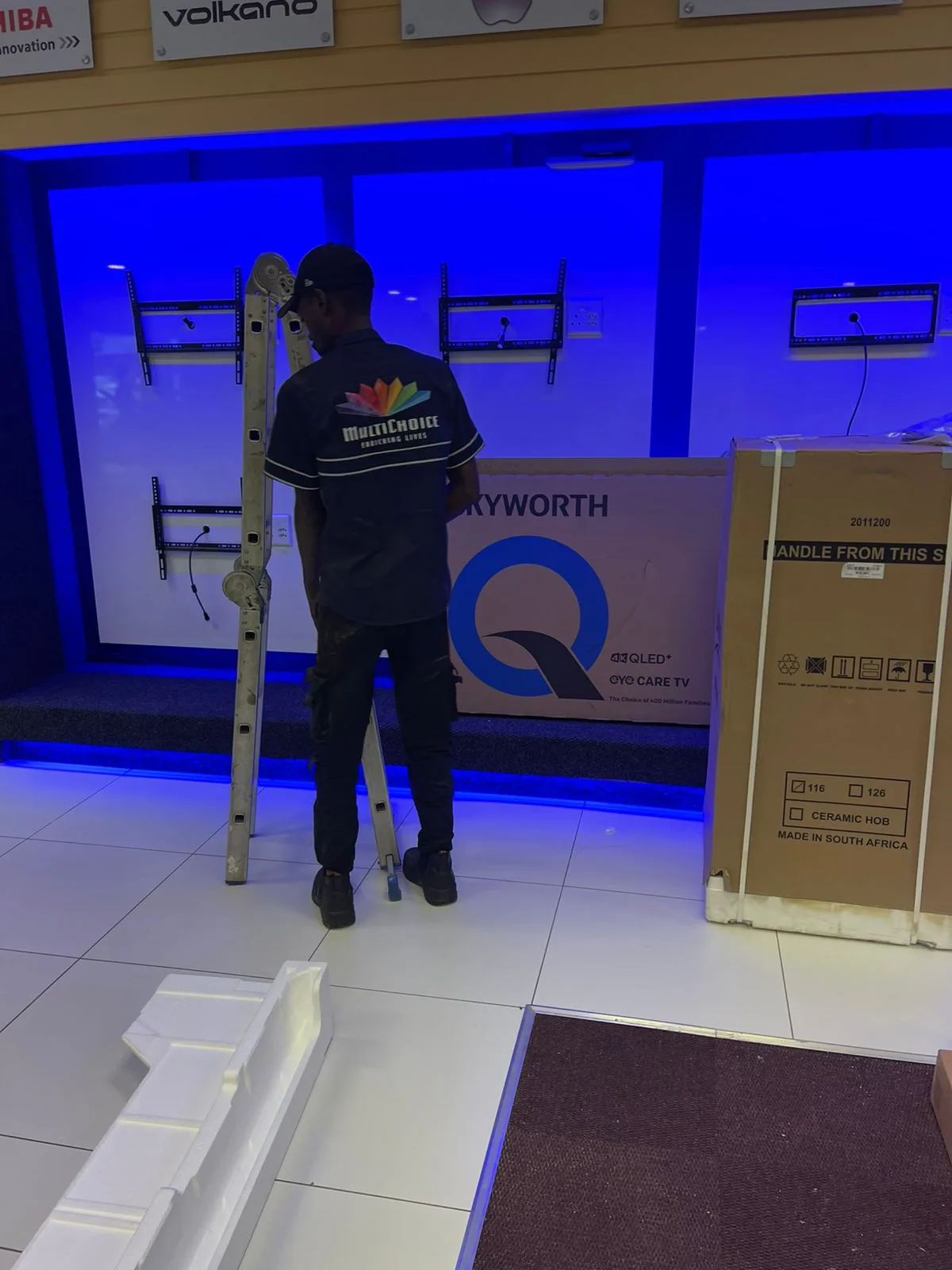
A professional dstv technician follows a structured technical process that differs significantly from a DIY attempt, and the difference is visible in the finished result as well as in long-term bracket stability.
The process begins with a site assessment that covers wall construction, stud or cavity location, cable routing path, and VESA pattern verification on the specific TV model.
The technician then marks anchor positions using a spirit level and a laser line, ensuring the bracket plate is perfectly horizontal before a single hole is drilled. An error of even 2 degrees on a 75-inch screen is visible at a glance from across the room.
Correct drill bit selection follows the wall substrate assessment. Masonry bits for brick, SDS percussion bits for concrete, diamond bits for tile, and wood bits for stud walls are each required at different sites.
Anchor installation uses the correct torque for each bolt type. Over-tightening a standard masonry plug in a cavity wall causes the plug to spin and lose grip, while under-tightening a resin anchor before cure time results in a false strength reading.
The bracket plate is then fitted, torqued to specification, and load-tested before the TV is attached. Our dstv technician applies a dynamic load test by pressing down on the mounted bracket at full arm extension to confirm anchor integrity before the screen is ever lifted.
Cable management is the final technical step, and we route HDMI, power, and coaxial cables through in-wall conduit or surface trunking to deliver a finish free of exposed wiring.
Heavy Duty TV Wall Brackets Combined with DSTV Installation in Gauteng
In the majority of residential setups across Gauteng, a TV wall mounting appointment coincides with a full dstv installation, because mounting a blank TV without a functioning signal source defeats the purpose of the installation.
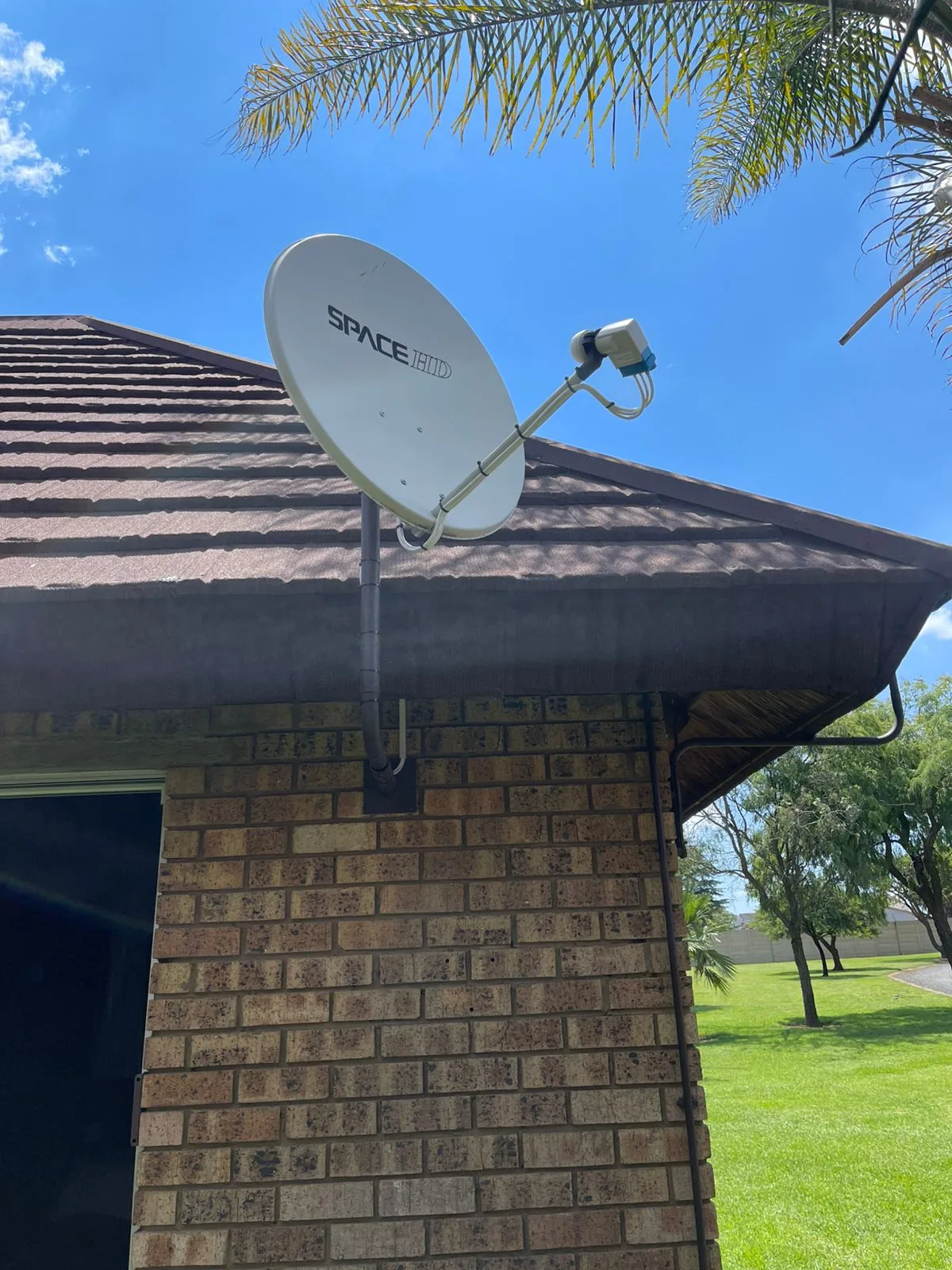
We schedule combined appointments where our team mounts the screen on the heavy duty tv wall bracket and simultaneously completes the dstv installation, including dish mounting, signal alignment, decoder pairing, and cable routing, within a single two-hour window.
This combined service eliminates the need for multiple booking slots and ensures that signal cable routing from the dish is planned around the wall mounting position from the start, which avoids cable path conflicts that occur when two separate contractors work independently.
Our dstv installers serve 28 Gauteng suburbs including Sandton, Centurion, Fourways, Randburg, and Bryanston, with same-day bookings available in most areas.
Pricing for a combined appointment starts at R850 for dstv installation and from R650 for TV wall mounting, making the total for a complete setup from R1,500 before any optional cable management upgrades.
Choosing the Right Heavy Duty TV Wall Bracket for Your Screen Size
Screen size alone does not determine bracket selection. Panel weight is the primary technical criterion, and two screens of identical size can differ by as much as 15 kg depending on the display technology and frame construction.
The table below provides a technical reference for bracket specification by screen size range.
| Screen Size | Typical Panel Weight | Recommended Bracket Rating | Anchor Type |
|---|---|---|---|
| 43 - 50 inch | 12 - 20 kg | Standard (up to 35 kg) | Standard masonry plugs |
| 55 - 65 inch | 20 - 35 kg | Heavy Duty (up to 60 kg) | 10 mm masonry bolts |
| 70 - 75 inch | 35 - 55 kg | Heavy Duty (up to 80 kg) | 12 mm masonry bolts or resin |
| 80 - 98 inch | 55 - 90 kg | XL Heavy Duty (100 kg+) | Resin anchors, through-bolts |
When in doubt, always select a heavy duty tv wall bracket rated at least 30% above the confirmed panel weight to provide a safety margin for dynamic loads and long-term stress on the anchor points.
Cable Management Options for Heavy Duty TV Wall Bracket Installations
A heavy duty tv wall bracket installation is technically complete once the screen is secured, but visible cable bundles running down the wall negate the aesthetic purpose of wall mounting and create a physical hazard in family environments.
We offer three cable management configurations with every wall mounting job.
- Surface trunking: PVC conduit channels are fixed along the wall beneath the TV and painted to match the wall colour, providing an enclosed cable path without in-wall work.
- In-wall routing: Cables are threaded through the wall cavity using flexible rods, emerging at a power point or AV cabinet below the TV with no visible trace of the cable path.
- Structured AV cabling: For home theatre setups with multiple HDMI sources, we route labelled HDMI 2.1, coaxial, and optical cables through dedicated conduit to a centralised AV rack position.
In-wall routing on solid brick walls requires a chase to be cut with an angle grinder, which we fill and skim over after cable installation for a seamless result.
Our dstv technician coordinates cable routing between the dish entry point and the decoder position when a dstv installation is part of the same appointment, ensuring all signal cables reach the decoder without looping through the room.
Common Heavy Duty TV Wall Bracket Installation Mistakes to Avoid
The following errors account for the majority of bracket failures and re-installation calls we attend across Gauteng.
- Using undersized anchors: Standard M6 wall plugs are insufficient for heavy duty tv wall brackets. The wall plate requires M10 or M12 bolts with a minimum 60 mm embedment in masonry.
- Mounting on a single-skin partition: Non-load-bearing internal partitions cannot reliably support screens above 25 kg without additional structural reinforcement behind the board.
- Ignoring VESA torque specifications: Over-tightening the VESA bolts that attach the screen to the bracket strip can crack the rear chassis of modern thin-frame televisions.
- Mounting above a non-flued fireplace: Heat from a gas or electric fireplace rises directly into the rear of a wall-mounted TV, shortening component lifespan significantly. A tilting heavy duty bracket at a safer height above the heat source is preferable.
- Skipping the level check: A 1-degree error on a 75-inch screen translates to a visible tilt of approximately 13 mm on the top edge of the panel.
- Misidentifying cavity positions: Drilling into a cavity rather than solid masonry produces anchor points with almost zero pull-out strength, which can cause complete bracket failure under dynamic load.
Service Areas: Where We Fit Heavy Duty TV Wall Brackets Across Gauteng
We cover 28 suburbs across Gauteng for both heavy duty tv wall bracket fitting and dstv installation, with typical arrival windows of two hours from booking confirmation.
Areas we serve include Woodmead, Northcliff, Roodepoort, Edenvale, Parkhurst, Vorna Valley, and Faerie Glen, among others.
For emergency bracket re-installation after bracket failure or screen damage, our emergency repair service is available across Gauteng.
Weekend appointments are available through our weekend installer booking option, which covers Saturday and Sunday at standard weekday rates in most areas.
To book or get a quote, call us directly on 077 454 4032.
A quick visual guide to the five factors to consider when selecting heavy-duty TV wall brackets. Use this infographic to compare load ratings, compatibility, adjustability, and installation options.
Pricing Guide for Heavy Duty TV Wall Bracket Installation in Gauteng (2026)
The following price guide reflects current service rates across our Gauteng service area for 2026. All prices include hardware, installation labour, and a basic cable tidy.
- Standard TV wall mounting (43-55 inch): From R650
- Heavy duty TV wall mounting (65-75 inch): From R750 - R900 depending on surface type
- XL heavy duty mounting (80 inch and above): From R1,000 (includes resin anchor hardware)
- Combined dstv installation and TV wall mounting: From R1,500 total
- In-wall cable routing: From R350 additional per wall
- Emergency re-installation (bracket failure): Call 077 454 4032 for current rate
These rates cover the full technical process from site assessment through to load testing and cable dressing. There are no hidden call-out fees within our standard service areas.
Conclusion
Selecting and correctly installing heavy duty tv wall brackets is a technical process that directly determines the long-term safety of a large-format television in any residential or commercial setting.
From bracket type selection and VESA pattern verification to anchor specification and wall surface assessment, each step requires accurate technical knowledge that goes beyond what a standard DIY installation can reliably achieve on screens above 55 inches.
As experienced dstv installers serving 28 suburbs across Gauteng, we combine professional heavy duty tv wall bracket fitting with full dstv installation in a single appointment, starting from R650 for mounting and R850 for signal setup.
To arrange a same-day or weekend booking, contact DSTV Pro Installers on 077 454 4032 or visit our TV wall mounting service page for full details on bracket options, pricing, and suburb availability.
Frequently Asked Questions
What weight can a heavy duty TV wall bracket hold?
Most heavy duty tv wall brackets are rated between 50 kg and 100 kg static load, which covers the majority of residential large-screen televisions from 55 inches to 86 inches. Always verify the confirmed panel weight against the bracket's rated capacity before purchase, and select a bracket rated at least 30% above the actual TV weight for a safe margin.
Can I mount a 75-inch TV on a plasterboard wall?
A 75-inch television should not be mounted directly into plasterboard alone, as the board cannot provide sufficient anchor pull-out strength for a panel weighing 40-55 kg. A qualified dstv technician will locate the timber or steel studs behind the board and use structural lag bolts, or fit a spreader plate across multiple studs to distribute the load safely.
Is it worth hiring a professional to install heavy duty TV wall brackets in 2026?
For screens above 55 inches or on wall surfaces other than straightforward solid brick, professional installation is the technically correct approach in 2026. A professional dstv technician completes the full anchor-to-cable-management process in under an hour and eliminates the risk of anchor failure, incorrect VESA fitment, or structural wall damage that can accompany DIY heavy duty bracket attempts.
How high should I mount my TV on a heavy duty wall bracket?
The center of the TV screen should sit between 42 and 48 inches from the finished floor level to align with the average seated eye level and prevent neck strain during extended viewing. If mounting above a fireplace or feature wall places the screen higher than this range, a tilting heavy duty tv wall bracket is essential to angle the screen downward to the correct viewing axis.
Can I combine TV wall mounting and DSTV installation in one visit?
Yes, we routinely complete both heavy duty tv wall bracket fitting and full dstv installation in a single appointment across Gauteng, which means signal cable routing is planned around the wall mounting position from the start. Combined appointments start from R1,500 total and are available Monday through Sunday across our 28 service suburbs.
What is the best bracket type for a large TV above a fireplace?
A tilting heavy duty tv wall bracket is the correct choice for above-fireplace mounting, as it allows the screen to angle downward toward seated viewers and reduces the excessive mounting height that causes neck strain. For installations above gas or electric fireplaces, our dstv installers will also advise on minimum clearance heights to protect the television's internal components from heat damage.
How do I know if my wall can support a heavy duty TV bracket?
The wall surface type, construction method, and stud or cavity locations all determine whether a heavy duty tv wall bracket can be safely installed, which is why a site assessment by an experienced dstv technician is the most reliable approach before drilling. We assess all wall types including solid brick, face brick, cavity brick, concrete, and plasterboard during our standard pre-installation check at no additional cost.
Keep reading
In case you missed it
Planning a job? See accredited decoder repair in Gauteng. Or browse our Bedfordview DSTV setup and Roodepoort installer team pages.
More to read: our Extra View guide for two-storey Gauteng houses.