DStv Satellite Dish Relocation: A Complete Technical Guide for Gauteng Homeowners (2026)
If you are planning a DStv satellite dish relocation, understanding the technical process before you start can save you time, money, and a loss of signal. The first-attempt success rate for dish installation is just 38% for unassisted attempts, but rises to 94% when using professional alignment tools and calibrated signal meters. That gap alone explains why so many homeowners in Gauteng call us after a failed DIY move.
Key Takeaways
| Question | Answer |
|---|---|
| What is DStv satellite dish relocation? | It is the physical process of removing an existing satellite dish from its current mounting point and reinstalling it at a new location on the same or a different structure, followed by precise realignment to Intelsat 20. |
| Can I relocate my DStv dish myself? | Technically yes, but the success rate without professional tools is very low. Signal alignment requires a calibrated meter, not a TV picture as a reference. |
| How much does dish relocation cost in Gauteng? | Satellite dish alignment and relocation typically ranges from R650 to R950 depending on complexity and cabling requirements. A full DStv installation cost breakdown is available on our site. |
| How long does a professional relocation take? | Professional technicians typically complete a dish relocation and signal re-peak in under 45 minutes on a standard residential property. |
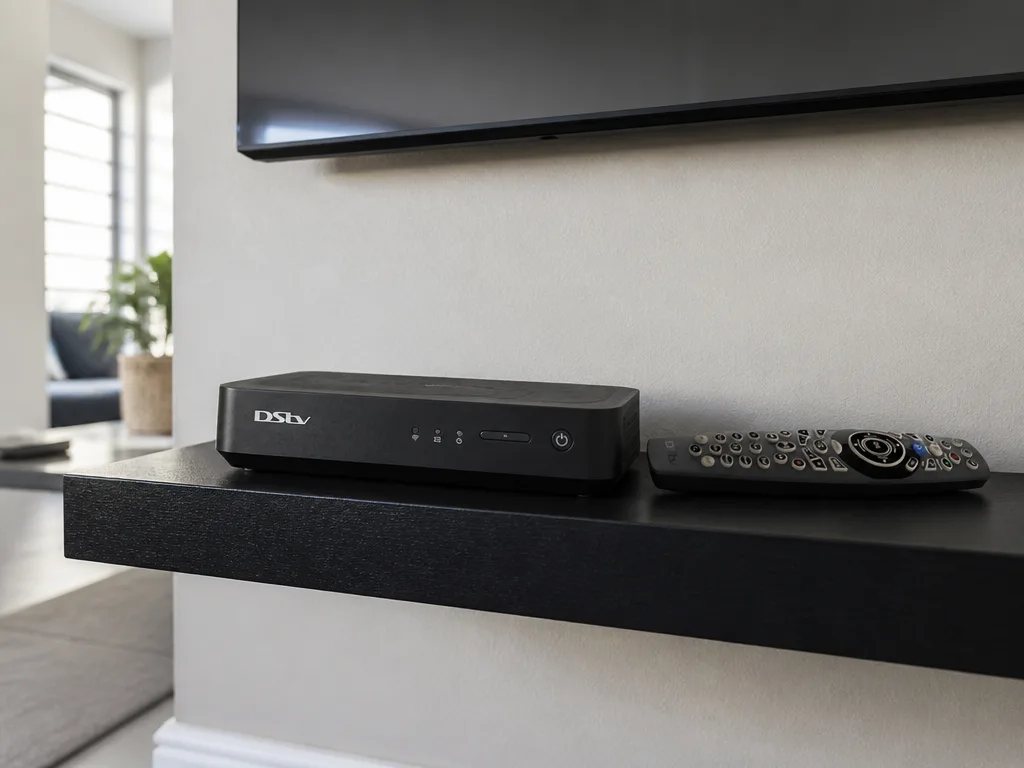
| Does moving the dish affect my decoder? | The decoder itself is unaffected, but new cabling runs and LNB skew adjustments are often required after a move to maintain signal quality. |
| Which suburbs does DSTV Pro Installers serve? | We cover 28 Gauteng suburbs including Sandton, Centurion, and Pretoria East. Call us on 077 454 4032 for same-day bookings. |
| Where should a satellite dish be mounted after relocation? | For optimal stability and signal quality, satellite dishes should be installed 4 to 6 feet from the main house structure to minimise roofline interference. |
What Is DStv Satellite Dish Relocation?
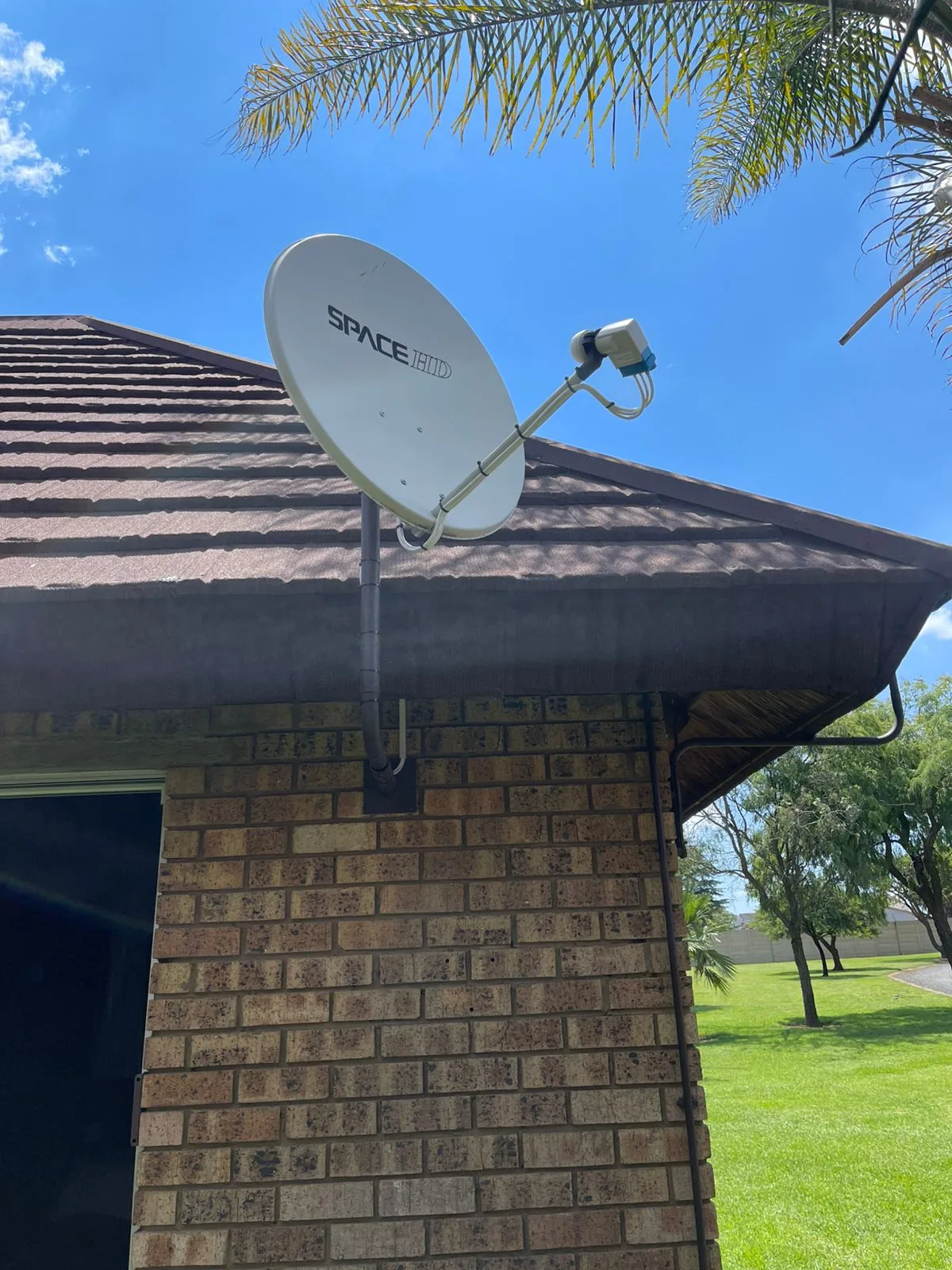
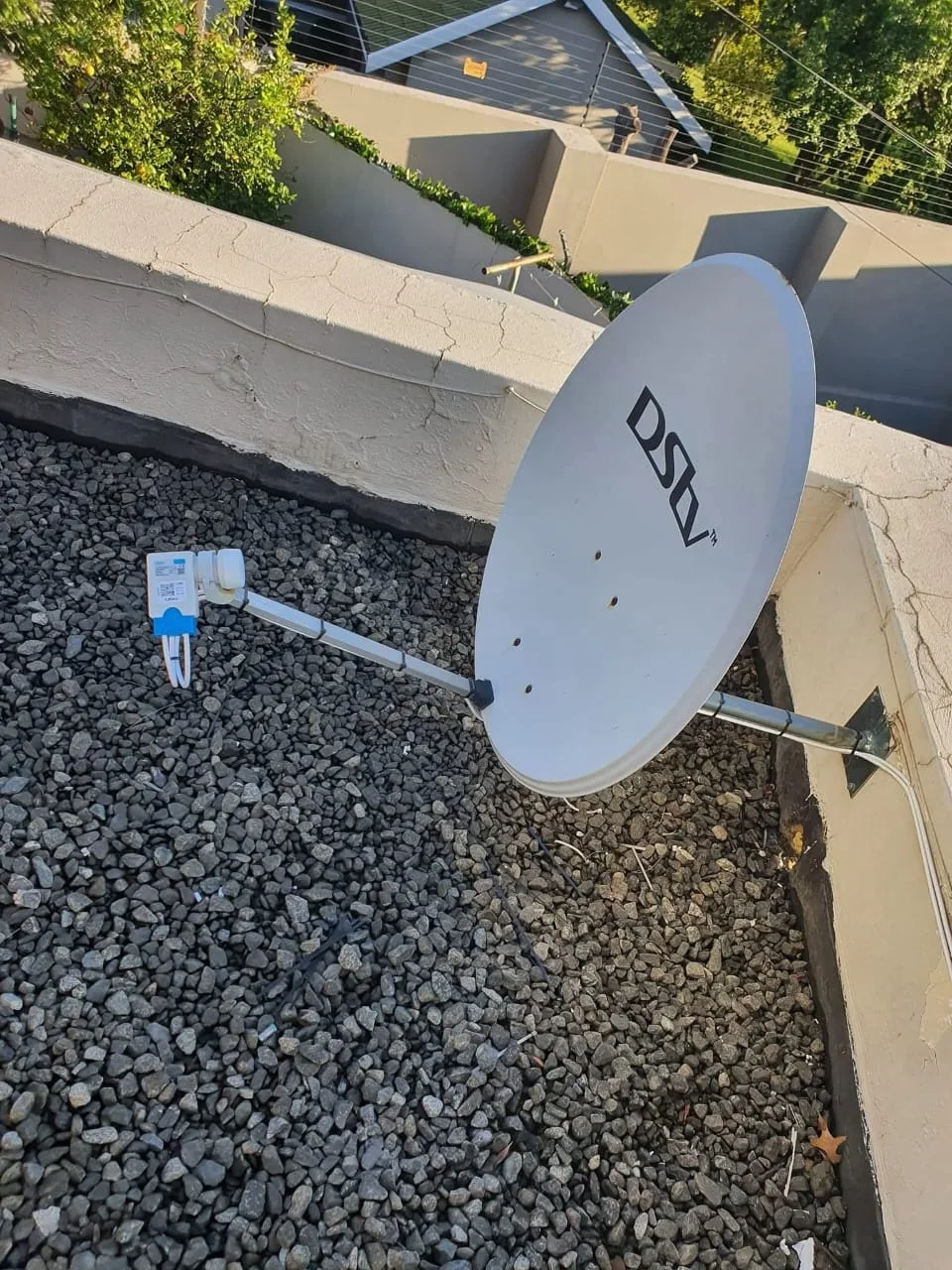
DStv satellite dish relocation refers to the full technical process of dismounting a satellite dish from its existing bracket or mast, running new or extended coaxial cabling, remounting the dish at a new position, and realigning it to the correct satellite arc.
In South Africa, the primary target satellite for DStv reception is Intelsat 20, positioned at 68.5 degrees East. Any shift in the dish's azimuth, elevation, or LNB skew by even a fraction of a degree can result in complete signal loss or an unstable reception level.
A relocation is not simply a matter of moving the mounting bracket. It involves assessing the new location for line-of-sight clearance, recalculating azimuth and elevation for the specific GPS coordinates of the property, and running compliant cabling without exceeding permissible signal loss thresholds.
When Should You Schedule a DStv Satellite Dish Relocation?
There are several scenarios in Gauteng where a satellite dish relocation becomes necessary rather than optional.
- Home renovations: Roof repairs, extensions, or retiling projects require the dish to be temporarily or permanently moved.
- Obstruction growth: Trees or new structures that have grown into the signal path since the original dstv installation need to be addressed by relocating the dish to a clearer mounting point.
- Tenant or property changes: New tenants or property owners may require the dish to be repositioned to better serve a different TV point location.
- Storm damage: High winds in Highveld thunderstorms frequently knock dishes off their original brackets, requiring full remounting.
- Aesthetic or structural reasons: Wall renovations or preference for a less visible mounting location are common triggers for a planned relocation.
Regardless of the reason, a dstv satellite dish relocation performed without the correct tools and technical knowledge carries a high risk of ongoing signal instability.
The DStv Satellite Dish Relocation Process Explained
Understanding the technical steps involved in a satellite dish relocation helps homeowners prepare adequately and set realistic expectations for the job.
Step 1: Site Survey
Before any physical work begins, the mounting position is assessed for unobstructed line of sight toward the southeast sky. Any structure, tree canopy, or roof ridge that falls within the satellite arc must be identified.
Step 2: Dismounting
The dish is carefully removed from its existing bracket. The LNB, feed arm, and cabling connections are inspected for wear or water ingress damage during this stage.
Step 3: Bracket Installation at New Location
A new mast bracket or wall bracket is fixed at the chosen position using appropriate fasteners for the surface material, whether brick, fascia board, or roof tile.
Step 4: Cabling Run
New or extended RG6 coaxial cabling is run from the new dish position to the decoder location. Cable entry points are sealed to prevent water ingress.
Step 5: Alignment and Signal Optimisation
A calibrated signal meter is used to peak the dish on Intelsat 20, adjusting azimuth, elevation, and LNB skew until signal quality and signal strength readings meet the required thresholds for reliable DStv reception.
This infographic outlines a simple 5-step process to relocate a DSTV satellite dish. Follow these steps to ensure proper alignment and signal quality.
Why Professional DStv Installers Are Critical for Dish Relocation
The technical tolerances involved in satellite dish alignment are tight enough that professional expertise is not a luxury but a practical necessity for a successful outcome.
Structural interference from rooftop HVAC units or steel framing introduces a plus-or-minus 6.2 degree azimuth deviation in standard compasses, which is enough to cause a complete loss of Ku-band signal reception. This means that even a careful DIY attempt using a standard compass application will frequently result in a missed satellite lock in suburban Gauteng environments.
Our satellite dish alignment service uses calibrated signal meters rather than visual references, ensuring first-attempt accuracy across all 28 Gauteng suburbs we serve.
Our dstv installers are fully accredited and carry the correct equipment to complete a satellite dish relocation and re-alignment in a single visit. We serve areas including Sandton, Centurion, Pretoria East, and 25 additional Gauteng suburbs. Call us on 077 454 4032 to book a same-day appointment.
DStv Satellite Dish Relocation Cost in Gauteng (2026)
The cost of a dstv satellite dish relocation in Gauteng varies based on the complexity of the new mounting position, the cabling distance required, and whether new brackets or mounting hardware are needed.
Based on our 2026 pricing, the following rates apply:
| Service | Price Range (ZAR) |
|---|---|
| Satellite Dish Alignment and Relocation | R650 - R950 |
| Standard DStv Installation (new position with full setup) | R850 - R1,450 |
| Explora Installation with Smart LNB Upgrade | R950 - R1,600 |
| Extra View Installation (multi-room) | R900 - R1,500 |
If your relocation also requires a decoder check due to an error code or signal fault, our decoder repair service runs between R750 and R1,350 and can be combined with a dish relocation visit in a single call-out.
For a detailed breakdown, visit our DStv installation cost guide.
Satellite Dish Alignment After a DStv Satellite Dish Relocation
Alignment is the most technically demanding part of any dstv satellite dish relocation job. Moving a dish by even half a metre laterally can require a full recalculation of azimuth and elevation settings.
The azimuth value describes the horizontal compass direction the dish face points toward, while elevation describes the vertical tilt angle. Both values are calculated based on the latitude and longitude of the installation site relative to the satellite's orbital position at 68.5 degrees East longitude.
LNB skew is the third variable. It corrects for the rotational offset of the signal polarisation as it reaches the ground at different latitudes across South Africa. Incorrect LNB skew is a frequent source of intermittent signal on premium channels even when azimuth and elevation appear correct.
Our professional satellite dish alignment service uses signal meters to read both signal quality and signal strength simultaneously, allowing our technicians to peak all three variables to within the operational tolerance of the LNB.
Common Technical Errors During DIY DStv Satellite Dish Relocation
We receive a significant number of call-outs in Gauteng to correct failed DIY relocations. The same technical errors appear repeatedly.
- Using a phone compass for azimuth: Nearby steel structures and roofing materials distort magnetic compass readings by 3 to 6 degrees, which is sufficient to miss the satellite entirely.
- Relying on picture quality for alignment: A weak or pixelating picture can appear at signal levels that will fail during colder nights or rain fade. A signal meter reveals the actual carrier quality that a TV display does not.
- Inadequate bracket fixings: Dishware that shifts even 1 degree in wind will cause signal dropout during Highveld storms. Fastener type and torque specification matter.
- Incorrect cabling: Using substandard coaxial cable or exceeding maximum cable run lengths degrades signal before it reaches the decoder.
- Skipping LNB skew adjustment: Many DIY attempts lock onto a satellite without adjusting LNB skew, resulting in loss of specific transponders and missing channels.
The cost of correcting these errors, including potential LNB replacement due to damage from sustained misalignment, often exceeds the cost of booking a professional dstv technician from the outset.
DStv Satellite Dish Relocation and the Explora Decoder
If your home uses a DStv Explora Ultra or Explora 3, the dstv satellite dish relocation process includes an additional technical consideration: the Smart LNB.
The Explora range requires a dual-output or Smart LNB to function correctly. During a relocation, the LNB type must be confirmed and the decoder re-paired to the new installation if cabling topology changes. A professional Explora installation ensures all connected services, including Catch Up, BoxOffice, and Connect Wi-Fi streaming, resume correctly after the move.
If your property also uses Extra View with a second or third decoder, the relocation must account for the additional cabling paths and LNB output requirements to maintain multi-room viewing after the move.
Choosing a Qualified DStv Technician for Your Dish Relocation
Not every person offering a DStv service in Gauteng holds the technical accreditation to work on Explora and Smart LNB systems. When booking a dstv satellite dish relocation, confirm that the dstv technician is accredited and carries a calibrated signal meter, not just a screwdriver.
Our team of dstv installers at DSTV Pro Installers hold full accreditation and operate across 28 Gauteng suburbs. We offer same-day bookings on most jobs.
A qualified dstv technician will assess the new mounting location before drilling, confirm cable run distances are within specification, use a signal meter for alignment, and verify decoder recognition before leaving the site. For bookings, call us on 077 454 4032 or visit our contact page.
For a full overview of our coverage and services across Gauteng, see our Gauteng DStv installation services page.
Conclusion
DStv satellite dish relocation is a technically precise job that involves far more than simply moving a bracket. Signal alignment to Intelsat 20 requires calibrated equipment, knowledge of azimuth, elevation, and LNB skew calculations specific to the installation site's GPS coordinates, and correct cabling practices throughout.
Attempting a dstv satellite dish relocation without professional tools and accreditation carries a statistically high rate of failure and risks accelerating LNB hardware degradation over time.
DSTV Pro Installers provides accredited, same-day satellite dish relocation services across 28 Gauteng suburbs. Our dstv installation service covers everything from initial site assessment through to final signal verification. Contact our team on 077 454 4032 to book your relocation today.
Frequently Asked Questions
How much does DStv satellite dish relocation cost in Gauteng in 2026?
A standard dstv satellite dish relocation in Gauteng costs between R650 and R950 depending on the complexity of the new mounting position and cable run requirements. If a full new dstv installation is required at the new position, prices range from R850 to R1,450.
Can I relocate my DStv dish without losing signal?
Moving a satellite dish always requires a full realignment after the move. The dish must be re-peaked to Intelsat 20 at the new position using a signal meter. Without this step, signal loss or instability is expected.
How long does a DStv satellite dish relocation take?
A professional dstv technician typically completes a full satellite dish relocation, including dismounting, remounting, cabling, and signal re-peak, in under 45 minutes on a standard residential property in Gauteng.
Does moving my DStv dish affect my Explora decoder?
The decoder itself is not damaged by moving the dish, but the new cabling topology and LNB configuration must be verified after a dstv satellite dish relocation. Explora decoders require a specific Smart LNB setup that must be confirmed after any dish move.
What causes signal loss after a DIY DStv satellite dish relocation?
The most common causes are incorrect azimuth and elevation settings due to compass interference from structural steel, failure to adjust LNB skew, and substandard cabling connections. A professional dstv technician with a signal meter eliminates all three failure points in a single visit.
How far from the house should a DStv satellite dish be mounted after relocation?
For optimal signal quality and structural stability, a satellite dish should be positioned 4 to 6 feet from the main house structure to avoid roofline signal interference. Our dstv installers assess each mounting position before installation to confirm line-of-sight clearance.
Is it worth hiring professional DStv installers for a dish relocation in 2026?
Given that the unassisted first-attempt success rate for satellite dish alignment is just 38%, professional dstv installers are the statistically reliable choice for a dstv satellite dish relocation that works correctly the first time. The cost of a professional service is generally lower than the combined cost of multiple failed DIY attempts and potential hardware replacement.
Keep reading
In case you missed it
Planning a job? See same-day decoder swap-out. Or browse our Bryanston DSTV setup and our Randburg DSTV team pages.
More to read: what to know before booking a PTA East installation.